
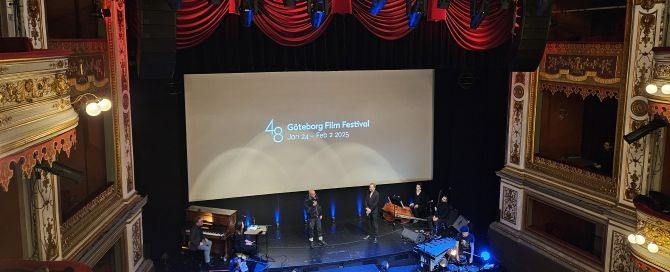
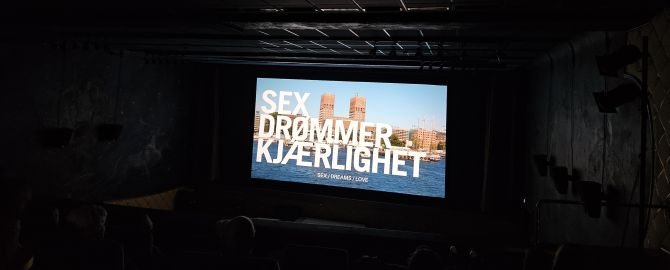
The 48th Göteborg Film Festival was held between 24th January and 2nd February 2025, with 270 titles from 83 countries packed into ten days. It opened with Eirik Svensson’s Safe House, a film that gives its protagonist precious little time to decide what the right thing to do is. That proved a fitting start to an edition whose Focus: Disobedience raised a rather awkward question: when does doing your duty mean refusing to do as you are told? The festival intro was also very creative in praising our stand for artistic freedom by watching a film during the 10 days.
Göteborg made sure to create enough opportunities to talk cinema outside the screenings also having room in its programme for a seminar on disobedience and a talk with Thomas Vinterberg, Julie Delpy, Trine Dyrholm, Mohammad Rasoulof, Dag Johan Haugerud, as well as Georgian master Dea Kulumbegashvili. Vinterberg and Delpy received the edition’s two honorary Dragon Awards. A festival is all the better for giving people somewhere to take the conversation once the credits roll.
It is of course impossible to cover everything, but I managed to log 28 films from the festival. Of those, the two that went straight to the top of my list were a Norwegian film that finds plenty to say in an ordinary conversation and a Finnish one that hardly needs words at all. Here are those two and a few more I’d make time for.
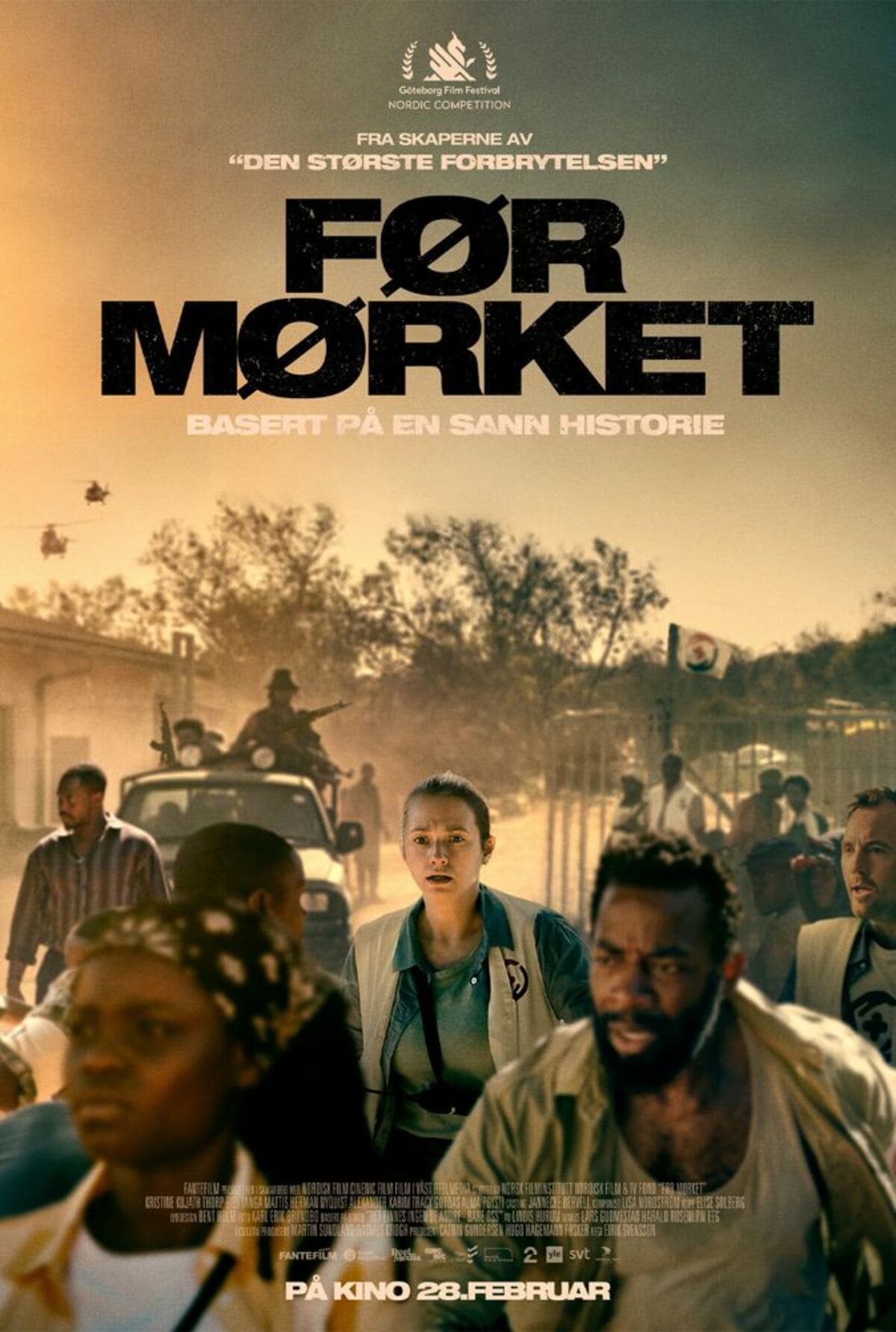
Safe House (or) Före mörkret (Norwegian, 2025)
A man fleeing a militia finds his way into a field hospital in Bangui, and the woman in charge of its security must decide whether protecting one life will endanger everyone else. What makes Safe House a nail-biter is not the prospect of violence alone, but the fact that every sensible course of action comes at somebody else’s expense. Eirik Svensson gets a good deal of mileage out of that one dilemma, and it is easy to see why the film took the Nordic audience award. Kristine Kujath Thorp delivers a towering performance filling her face with conflicting emotions.
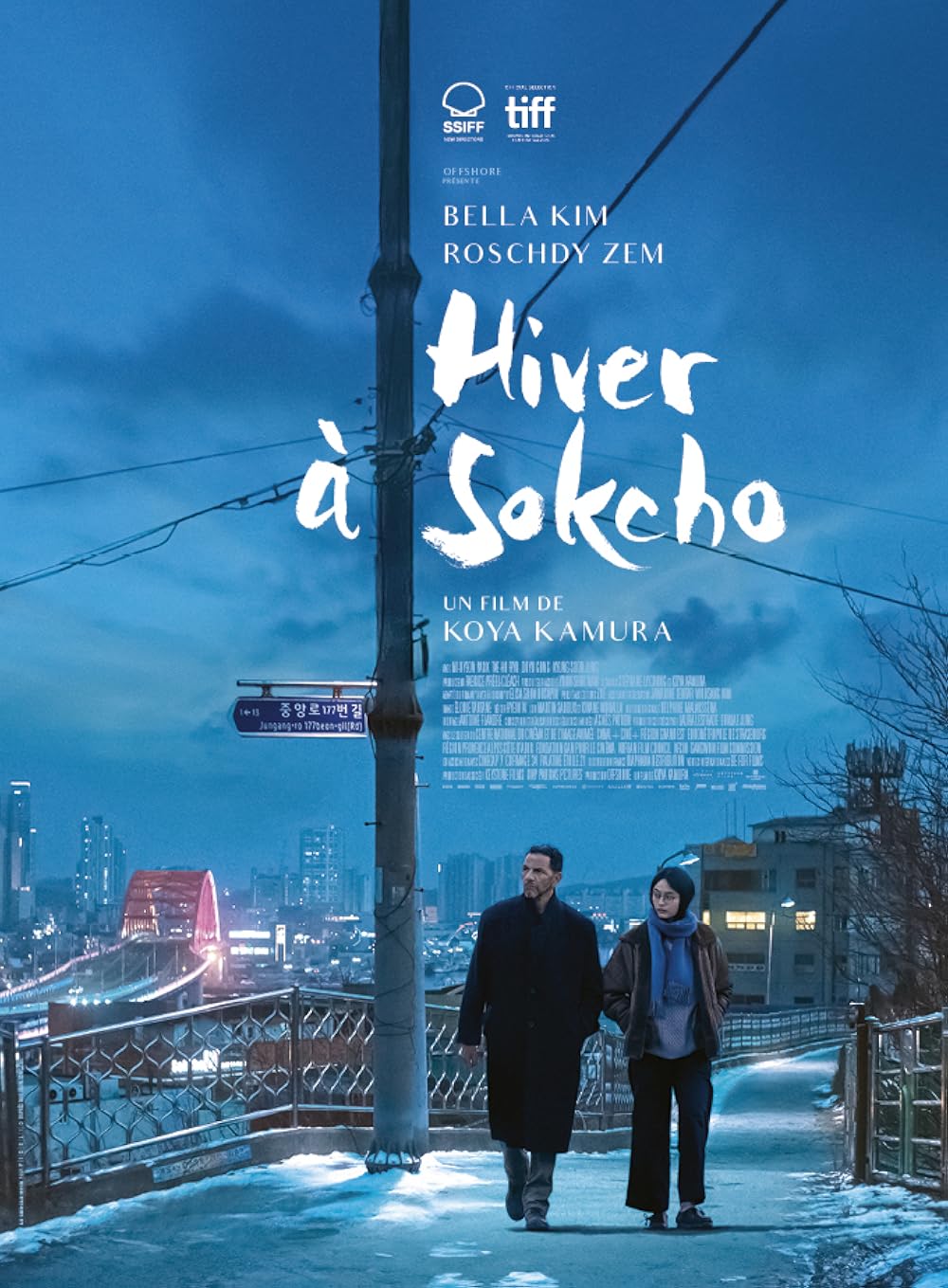
Winter in Sokcho (or) Hiver à Sokcho (Korean/French, 2024)
A French artist checks into a guesthouse in a South Korean seaside town in the off-season. The young woman at the desk takes an interest in him, though not quite in the way one might expect from that set-up. Koya Kamura makes as much of the food she prepares and the pictures, he draws as he does of their conversations. It is a lovely instance of a film knowing when to leave something unsaid letting people linger in the sadness in the muted color palette.
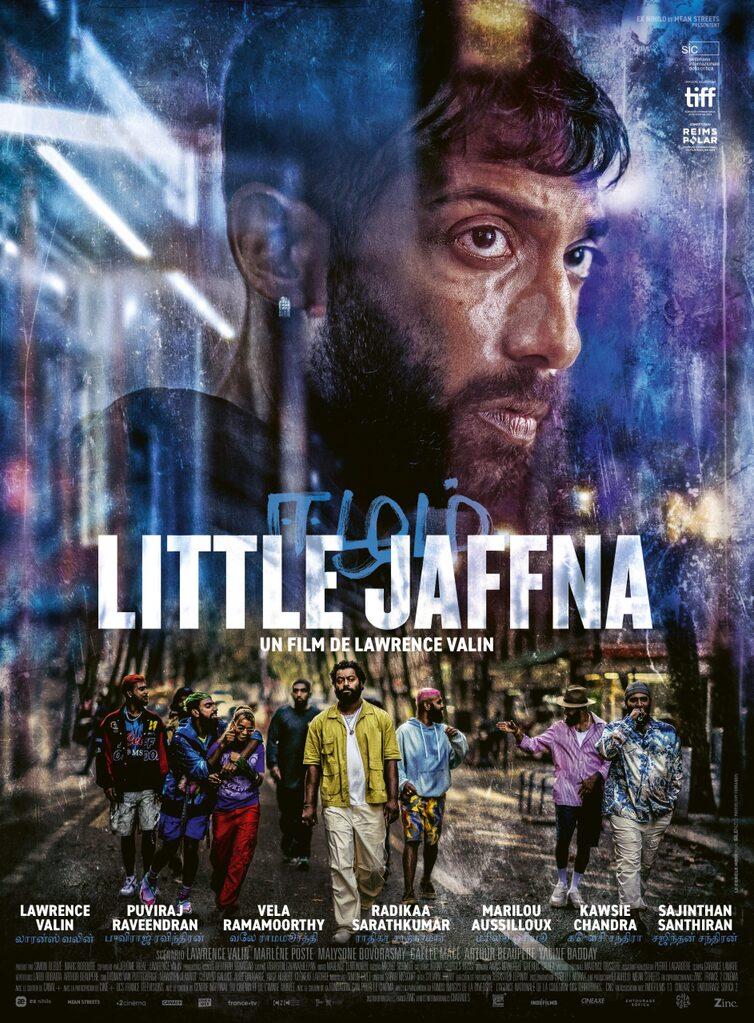
Little Jaffna (Tamil/French, 2024)
An undercover policeman getting too close to the people he is meant to bring down is hardly a new proposition. What gives Lawrence Valin’s film its bite is that Michael, played by Valin himself, enters the Tamil community in Paris to prove his credentials as a French officer and finds a sense of belonging there that the job cannot give him. Being a Tamil myself, it was an astounding experience to see actors like Vela Ramamoorthy and Raadhika Sarathkumar owning the screen in this French film playing vital characters that influence the plot. The film captures the true essence of the Tamil immigrant struggle in Paris, and the extraordinary soundtrack made the big screen experience a memorable one.
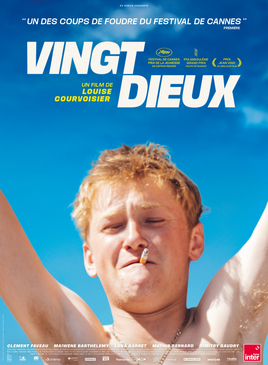
Vingt Dieux (or) Holy Cow (French, 2024)
An 18-year-old who barely knows the first thing about making Comté decides to make the best cheese in the Jura, largely because the prize money might help him look after his little sister. Louise Courvoisier’s lovely coming-of-age drama has the good sense to let Totone be an exasperating teenager even after giving him a reason to grow up. The casting and the attention paid to the actual work of making cheese do more for the film than any rousing monologue about responsibility could have done. The heartwarming climax makes you leave the cinema hall with a smile on your face.
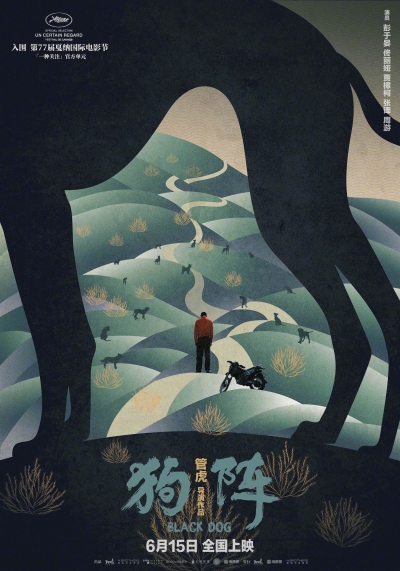
Gou zhen (or) Black Dog (Mandarin, 2024)
Lang returns from prison to a town on the edge of the Gobi Desert, where his job is to round up strays ahead of the Beijing Olympics. Naturally, the creature he is supposed to catch turns out to be the one he has most in common with. An ex-con and a dog could easily have been an excuse for sentimentality, but Guan Hu keeps the town and its empty spaces in view. The one exception from the proceedings being the scene with the guitar where he plays to the gallery, but why not, when you can conjure up such a poetic moment. In addition to the relationship with the dog, it also throws some fine commentary on the other characters such as Uncle lang played beautifully by the master Jia Zhangke. It is a rather fine western in which a man does not have to explain himself and, for once, neither does the dog for being who they are and how they react to globalization.
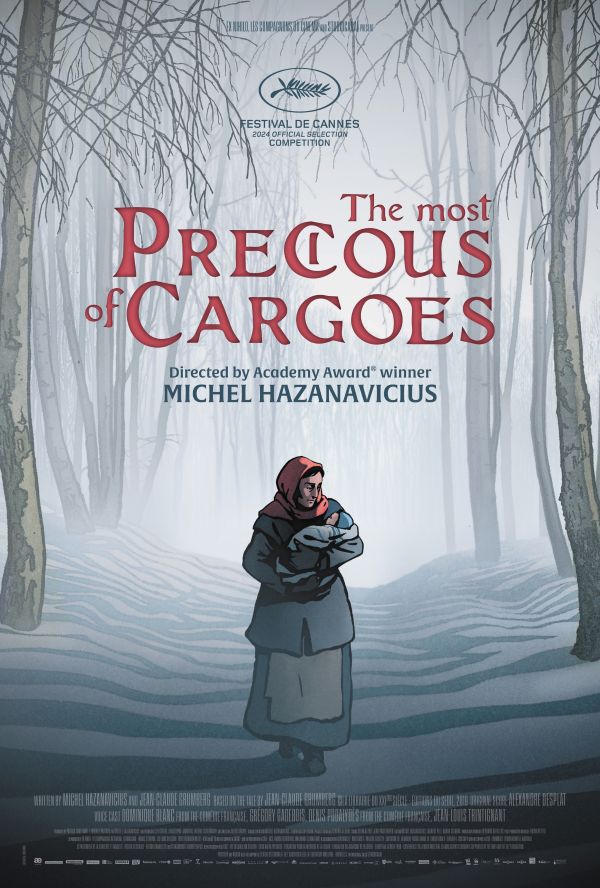
La Plus Précieuse des marchandises (or) The Most Precious of Cargoes (French, 2024)
Michel Hazanavicius begins with the makings of a fairy tale: a woodcutter, a forest and a child in need of rescue. The grim setting and the horrors of Auschwitz are also captured elegantly through the spare animation. It gives the woodcutter’s wife’s act of kindness the simplicity of a fable without making the world around her any less horrifying.
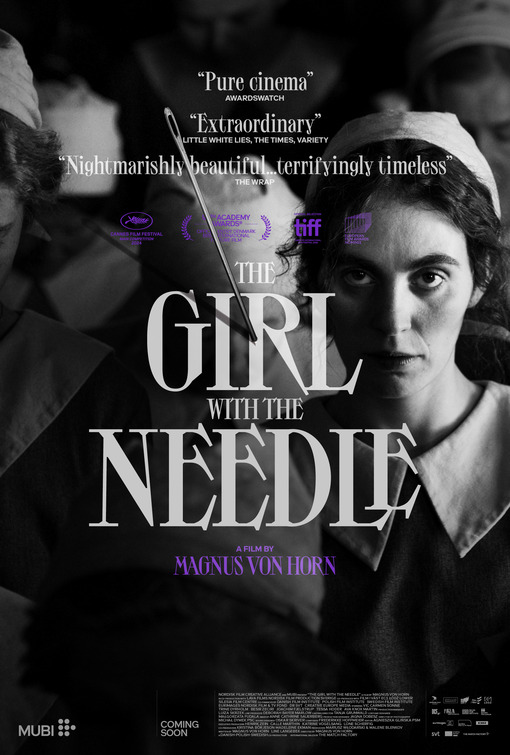
Pigen med nålen (or) The Girl with the Needle (Danish, 2024)
I called this one “nerve-racking” and “spectacular” after watching it at Draken, and the two words still belong together. Vic Carmen Sonne plays a young woman in post-war Copenhagen whose encounter with Trine Dyrholm’s Dagmar first looks like a stroke of good fortune. The black-and-white photography and the performances make even those early moments of relief feel precarious. The collective gasps that resonated in the Draken when the events played out on the big screen need to be experienced by every film-goer at least once in their life. Certainly not for the faint-hearted, but a less unsettling film would have had far less to say about the circumstances that bring these women together.
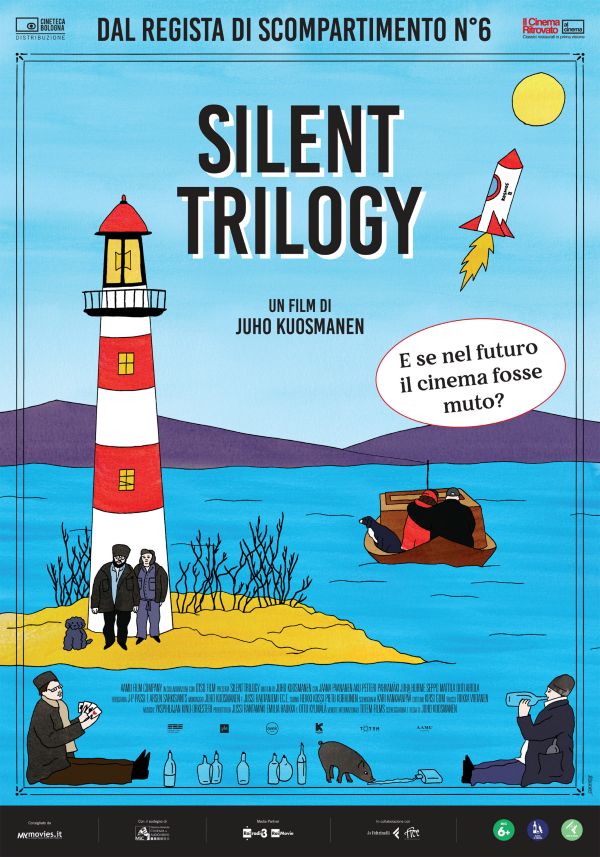
Mykkätrilogia (or) Silent Trilogy (Finnish silent films, 2024)
A man getting rid of his belongings, a pair of moonshiners and a lighthouse keeper with ambitions well beyond his lighthouse: Juho Kuosmanen does not need a grander canvas than this. The joke in each short is easy enough to grasp, but look at who gets to be funny, resourceful or hopelessly ambitious. That affection for people usually left at the margins is what makes the three films hang together. The music by Finnish big band Ykspihlajan Kino-orkesteri and foley effects by Heikki Kossi and Pietu Korhonen, with special live-accompaniment screenings transported us to that period, at the Stora Teatern.
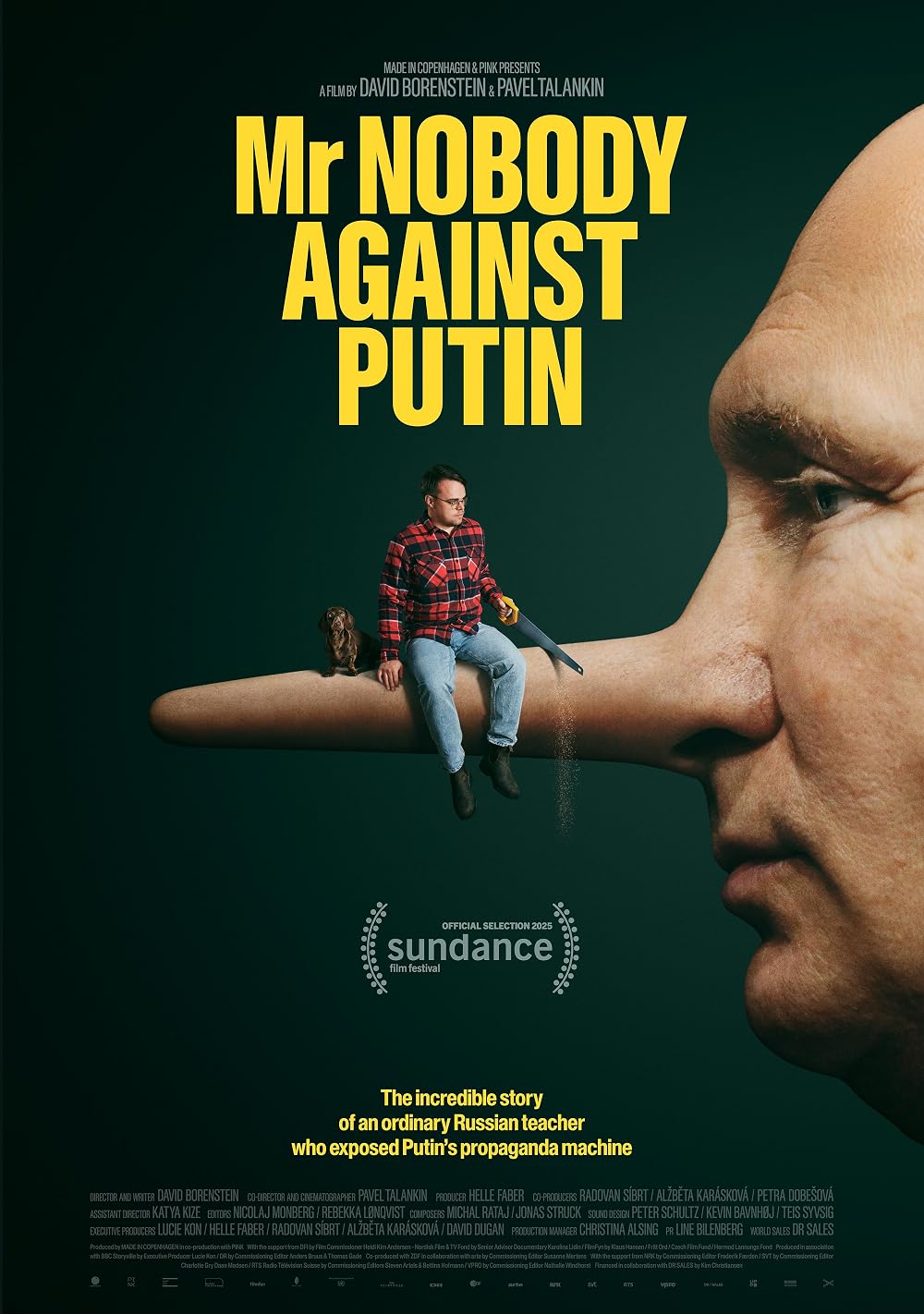
Mr. Nobody Against Putin (Russian, 2025)
Pavel Talankin is asked to document his school’s patriotic activities and ends up making a record of what those activities do to the school. That reversal is the most compelling thing about the documentary. The footage is disturbing not because every moment is extraordinary, but because so much of it starts to look like an ordinary school day. There may be no better illustration in this selection of how useful a camera can be when someone refuses to point it only where they are told. The film humanizes the general Russian public and a courageous school teacher functions as their messiah to portray their struggles.
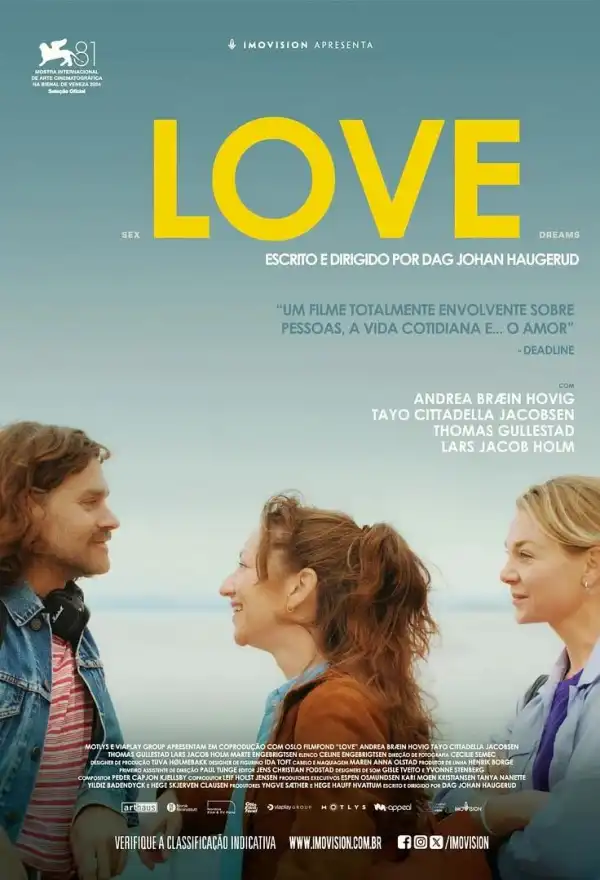
Kjærlighet (or) Love (Norwegian, 2024)
I came away thinking of Love as a letter from Oslo, trying to explain why love can seem both futile and indispensable. A doctor and a nurse meet by chance on a ferry, and the candor of their conversation does more to unsettle the usual ideas about romance than an elaborate love story might have managed. Andrea Bræin Hovig, who won the Dragon Award for Best Acting, makes Marianne’s curiosity every bit as interesting as whatever she decides to do with it. Dag Johan Haugerud has made a film that takes love seriously without insisting that everyone go about it the same way.
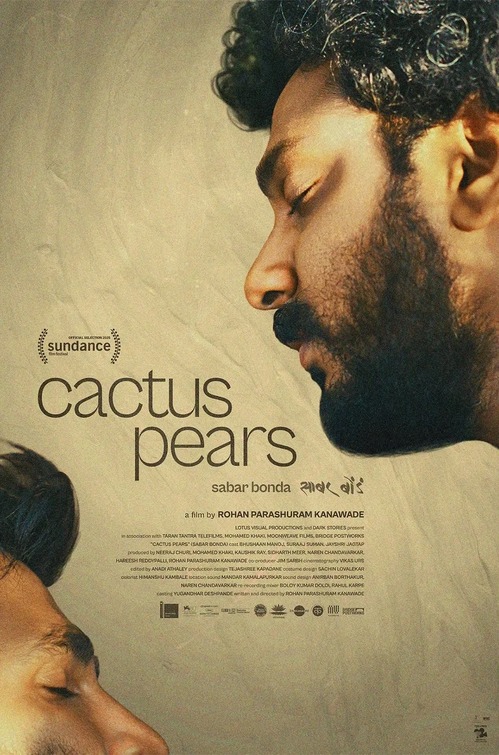
Sabar Bonda (or) Cactus Pears (Marathi, 2025)
Anand goes back to his village to mourn his father and finds that his relatives are more interested in when he plans to marry. His growing closeness with a childhood friend under similar pressure makes the ten days he has to spend there something more than an obligation. As the funeral pyre lights up, sparks fly between Anand and Balya. Rohan Parashuram Kanawade understands how care and intrusion can come from the same people, sometimes in the same conversation. It is that understanding, as much as the tenderness between the two men, that makes this such an assured debut, taking us back to “Call me by your name”.
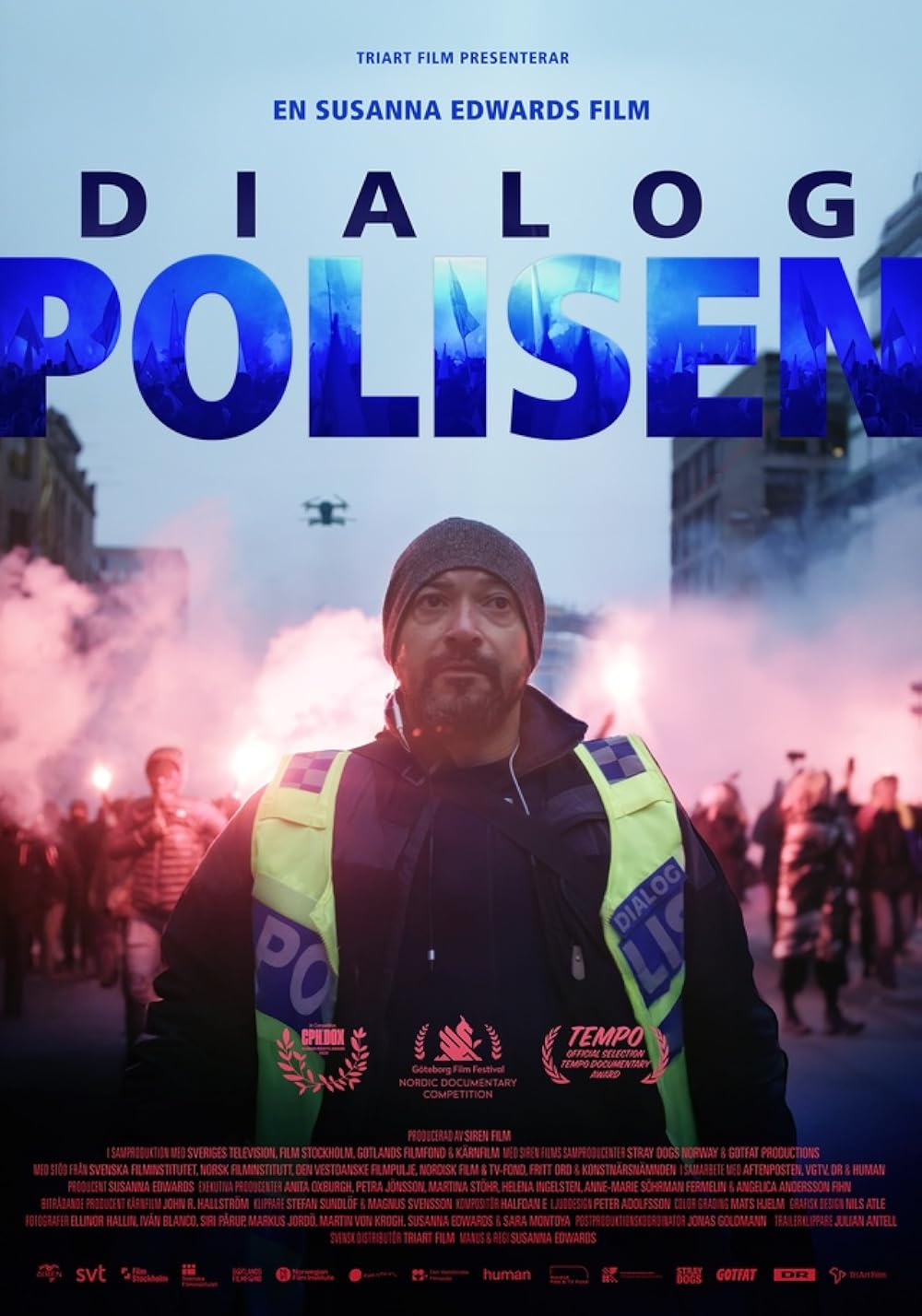
Dialogpolisen (or) The Dialogue Police (Swedish/Turkish/Farsi, 2025)
Susanna Edwards follows a police unit whose job is to keep talking when just about everyone else has a reason to stop listening. The unit was formed after the 2001 Gothenburg riots and works between protesters and police leadership. It is in fact a proud moment that Göteborg had already screened School under Seige in 2023. What makes “The Dialogue Police”, a lovely documentary is how quickly it takes a fine-sounding principle and turns it into a practical problem. Of all the films to finish the festival on, one about keeping the right to “disagree”, alive seemed particularly apt.
Column written by Anand Sethuraman.

Leave A Comment